Showing posts with label horror novels. Show all posts

Aug 11, 2012

Time for the publicity juggernaut to start up again

Well, it's been awhile, but after much, much, much laziness on my part (catching up on Lost turned out to be a real timesuck), I have finally got the second novel done somewhat to my liking. Which is fairly lucky, since it comes out in less than two months.

Husk final cover, designed by David Gee
Yes, Husk (click the link for description) is on its way to terrorize bookstores with its ridiculous tale of a zombie with glimmers of morality. Meaning that yes, he does eat a fair amount of people (a zombie novel without cannibalism is like a vegetarian who still eats fish; completely wrongheaded on the concept), but at least he feels conflicted about it.

I've decided to branch out and start an official author page, which you can find here. Already I've posted a few entries on my thoughts concerning zombies, and I'll continue to focus most of my energies on keeping the site filled with current information. Expect it to fill quite rapidly with reviews and events, and I'll be using it to promote further writings and projects down the road. I've also begun a public Facebook page for the novel, which I do hope you'll all check out and join (with the possibility of a free copy up for grabs to all members). I'll keep up my reviews here from time to time, but very likely in a reduced capacity for the foreseeable future.

Already, the buzz is building. Husk has been noted as a hot Fall release by Quill & Quire, and Russell Smith gave it a muted mention in one of his Globe and Mail columns (the title's not there, but I'm fairly certain I'm the only CanLit author with a zombie novel on the horizon, unless Alice Munro has decided to finally publish her long-awaited Lives of Undead Girls and Decomposing Women). I've also been lucky enough to cajole remarkable blurbs from some of my favourite authors (Andrew Pyper, Andrew Kaufman, and Peter Darbyshire, a trio that proves CanLit ain't all about  prairie winters and hardscrabble lives), which you can find on my author website.

I've been contacting bloggers and websites with a bent for the horrifically unusual or the unusually horrific to get some early review coverage. If you know of any that get a fairly wide readership, don't hesitate to contact me with the details. I've also been working on the launch in my current habitat in Fredericton, NB, and will get those details finalized ASAP.

Best of all, I've been accepted to two prestigious Canadian literary festivals for autumn 2012. In late September, I'll be travelling to Manitoba to participate in two events at the Thin Air Winnipeg International Writers Festival. One will be in Winnipeg proper (date and time TBA), and the other (on the evening of Sept. 21) will be a special event in Brandon, MB, where I'll be having a reading of Husk followed by the local premiere of the new Canadian horror comedy A Little Bit Zombie. This film was actually financed in large part through crowdsourcing, and has garnered a fair amount of good reviews as it travels the festival circuit. Needless to say, I'm quite stoked about pairing up my novel with this by-all-accounts very silly and very gory little slice of Canucksploitation. Should be a great evening, and a great overall time back in the prairies.

The highlight for me, however, is having two events (TBA) at the International Festival of Authors in Toronto, ON, near the end of October. I don't yet know who is on the bill with me (I'm not so deluded as to think I have a huge amount of drawing power), but just getting in the festival is a huge career highlight for me. Looking at the full list of participants, I can only assume I'll be paired up with Michael Chabon, Rohinton Mistry, and Gordon Pinsent. Only makes sense.

Finally, next week I shall be unveiling the spanking new book trailer, created and edited by yours truly, with invaluable help from a gaggle of nieces and a murder of nephews. I shall place it up on this site eventually, but I shall showcase it first on my author website and the Husk Facebook page. If you like the trailer, please distribute it on your own pages, tweets, and blogs accordingly.

It has been quite a ride for me so far, and there's still two months until I see it sitting atop the shelves. I hope you'll all enjoy my strange little monster, and perhaps we'll get a chance to meet when I'm on the road.

Jun 12, 2012

My newest author crush: David Nickle

There's a sign on the gate:

You must be this intelligent to enter.


So says the monkey, your highly-trained carnie for this carousel of dreams.

____________________________


I can't tell you what a relief it is to be confronted with a "horror" author whom I cannot say reminds me of Stephen King. This is nothing against King, mind you; his style is deeply effective, and there is a reason he has earned so many imitators, consciously or not.

How often, however, can you reach into that well before you cry "Enough!"? It's inevitable that all authors will resemble some other writer in overall style, with the unarguable exception of Kurt Vonnegut, and King's style is just simple enough to tempt new authors who cannot see the masterful effort that underlies the words. So when a novelist comes along that is the first in a long while to evoke pleasure of writers past while at the same time breaking though new territory, I take notice. Nick DiChario brought me new Theodore Sturgeon stories long after the old master had passes away. Gemma Files has channelled Clive Barker in her stunning horror westerns. And now, Canadian author David Nickle has gifted me with new Dan Simmons (not that Simmons is done himself).

Not that Simmons is done, he's still going strong, publishing at least one novel every year. Simmons is a maestro of practically every category of fiction, an author at ease in horror (Summer of Night, Song of Kali), historical fiction (Drood, The Terror), crime (Hard Freeze), and science fiction (the immortal Hyperion, among many others). He dances through genres like no one since Joe R. Lansdale (still going as well), and he continually brings a new perspective to every genre he touches.

So, too, does David Nickle, busting through the gate with two (2!) novels from Chizine (best genre publisher working today) that have completely floored me with their verve, originality, and utter command of story. I admit to not having yet read his short story collection Monstrous Affections, but I have no doubt it will continue Nickle's streak. His novel Eutopia is a gloriously original American historical horror, and his follow-up Rasputin's Bastards is a bold and disturbing Russian epic spy thriller that takes drastically disparate elements (there are echoes of James Bond, John le Carré, China Mieville, and Simmons' Carrion Comfort) and mashes them together in a fantastical narrative that crosses POVs and dimensions with an assurance that is staggering.

Have I got your attention yet? Good. Because David Nickle is that good.


Please note: the following comes mostly from memory, as I don't have the books on me at present. So, no quotations.

Eutopia (subtitled A Novel of Terrible Optimism) is ostensibly a historical drama, set in a small isolated mill town in Idaho in 1911. The town, Eliada, is idyllic, with no bars, no vice, and no outward strife. It is, indeed, an experiment in social control, led by a powerful businessman who dreams of his own Utopia. But as must happen in such tales as these, deep evil lies in the woods beyond, evil in unsettlingly lovecraftian forms, evil that recalls the fairy tales of the Brothers Grimm at their most grimmest.

Into this simmering tempest Nickle throws a young man who has mysteriously survived a plague, and a black doctor who knows all too well how flawed Eliada really is. As they hurry to understand what is really happening beneath the idyll (shades of David Lynch), Nickle elegantly weaves themes of faith versus science, man versus man, and nature versus all, and no fair telling who wins, if you can call it winning.

As Nickle pulls the strings of his dizzying array of characters, his plot leaps from period western to redneck horror to magic realism, all without stumbling or missing a beat. This is dark, weird fiction that follows a logic all its own, pulling out all the stops in raising the creepy quotient, yet cementing the bizarre goings-on in characters who pull you along.

Rasputin's Bastards is an almost complete about-face (again, shades of Simmons). Nickle now delves into Cold War espionage territory, this time in a tale replete with guns, adventure, and of course, telepathic Russian spies bred in a secret facility. Sent underground after the war ended, the telepaths use their vast powers for their own means, while their young progeny find themselves being diverted against their will to an unusual location.

Rasputin, like Eutopia, is not a novel easy summarized. Nickle seems to delight in keeping the reader off-balance, easily achieved when half the novel is set in various fantastic mindscapes that continually weave in and out of conscious reality, creating a novel wherein the reader is perpetually on edge and unsure exactly where any single point of the narrative is set. If you are looking for an easy read a la James Patterson, stay far away: if you find China Mieville's expert world-building to be enthralling stuff, you'll have quite a time here.

And there are some squid present, in case you get bored.

Look, by now you can tell what kind of books these are, and whether you're interested. Genre fiction will always suffer the sniffs of snobs (lest you think otherwise, I'm a snob too, can't be bothered with romance, and Tolkienesque ogre opuses leave me cold [plus, did you read that Patterson snub in the previous paragraph?]). Nickle isn't writing for the cheap seats; he's unapologetic about writing for the front row, the elites, the ones who "get it."

Get it? Like Simmons, you can't rush headlong in to Nickle's work, you need a base to draw experiences from. Read your King, bone up on your Shelley, devour your Barker and Lovecraft and Poe and Bloch and Howard.

Then, move on up, and know that you've earned your right to take a ride.

So sayeth the monkey.

May 3, 2011

Monkey droppings - A Book of Tongues, by Gemma Files

The monkey likes magic. And westerns. And horror.

But all three? At once?

Fair warning: this review will be one of the geekiest the monkey has ever done.

A Book of Tongues (ChiZine, 2010)
by Gemma Files
Once, the Rainbow Lady had told Asher Rook, in dreams, a human ball-player was enticed by owls to pit his skills against the lords of death, and made a descent into what was then called Xibalba. He swam the river of blood, yet did not become drunk with it. He reached the crossroads, the Place of All Winds, where he took not the red road, nor the white, but the black. He entered the bone canoe, piloted by spiders and bats. He sank downwards, through cold water, to the whole world's bottom.

Xibalba, as it was called then. Mictlan, as it became. Mictlan-Xibalba, as it is
now, and will be, forever more.

When he arrived, however, he was met only with mockery and betrayal. The Sunken Ball-Court's kings set him impossible tasks, then cheated the rules to make sure he would fail, and sent him to be executed, decreeing that his severed head should be set in a tree by the wayside, as a warning to other travellers.

Promptly, the tree flowered all over, producing a hundred succulent calabash melons that attracted the attention of Blood Maiden, the Blood Gatherer's beautiful daughter. She reached up to pick one, only to discover she held the ball-player's skull instead. The skull spat in her hand, and told her: Though my face is gone, it will soon return, in the face of my son. And she found herself pregnant.
Confession time: I'm a geek.

No, no, please, let me finish. I'm a geek, and as such, there are certain literary qualifications I feel I have to admit to. I worship at the altar of all things Vonnegutian (if that's not an accepted term, consider it copyrighted to me and me alone, and you owe me a nickel if you use it in conversation). I play video games; perhaps not with the same "three day weekend of video goodness" mentality of my youth, but I recently completed Arkham Asylum, and am slowly working on the original Dead Space (I haven't jumped this much at a game since Resident Evil). In my early thirties I dressed as Bruce Campbell for Halloween, complete with chainsaw hand and sawed-off boomstick. I read zombie novels (hell, I'm writing one), I'm now heavily into the fantastical imaginations of Jeff Vandermeer and China Mieville, I'm deeply drawn to steampunk, I've even contributed to a fantastical bestiary (still coming, click here for proof of my bookish geekiness). I can quote Monty Python sketches verbatim.

So yeah, I have geek credentials, a membership in the geek-of-the-month club. My not attending sci-fi, fantasy, and other genre conventions has far more to do with geographic placement than it does desire.

But if there is something that I geek out over more than anything else, it's Clive Barker.

Me and Clive BarkerWhen I first started reading horror (probably too young, but hey, psychological scars don't show), it was Stephen King I flocked to, devouring everything of his I could, shaping my sensibilities for decades to come. From him, being a gateway author, I experimented with others; I dabbled in Koontz (too silly, no lasting side-effects), Simmons (whoo, a rush and a half), McCammon (ups and downs, usually a good ride), Rice (strong start, lately almost unreadable), Lansdale (now that's more like it), Wilson (Repairman Jack, what a guy), and Lumley (ridiculous, but those covers haunted my nightmares as a teen).

But even beyond all those, the writings of Barker were a gutpunch to my psyche. Something about his style, gothic and gory and gorgeous, sank its talons into my medulla and began an eminently enjoyable parasitic relationship. Some labeled him as a 'splatterpunk' author, but Barker has never been a gore-for-gore's-sake sort, although he splashes the mausoleum red with the best of them. Reading The Hellbound Heart, with its miasma of kitchen sink marital drama and religious sadomasochism, was to suddenly comprehend the vast depth of perversions that exist outside my tiny middle-class life. The Damnation Game and The Books of Blood gave me epic horrors I never knew could be put to paper. Cabal gave me monsters as heroes, and to date is likely the only classic of modern horror to be set in Edmonton, Alberta. His efforts Weaveworld and Imajica and The Great and Secret Show proved to me that there existed the possibility of truly adult fantasies that created monsters and otherworldly terrains yet were not the usual hack-and-slash D&D epics that taint the fantasy shelves of my favourite bookstores (yeah, despite my geek certification, I've never fully embraced the genre subset of trolls and elves and middle-earth Tolkien wannabees). Barker filled his tales with mytho-religious symbolism, depraved desires, and the glories of all assortments of sexuality on a level I had never before experienced. And I fell head over hooks for him.

But Barker's output is now sparse and erratic, with many promised jewels still awaiting completion (where are you, Scarlet Gospels? If I don't get my Harry D'Amour/Pinhead crossover soon . . . ). So I've been forced to look elsewhere for similar entertainments, and while I have not regretted the search, I can emphatically state that I have never found an author who raised in me the same level of excitement.

Until, of course, the true subject of today's meandering post, Gemma Files, a Canadian author with some short story collections and poetry chapbooks to her credit, but nothing that has ever appeared on my radar. But her publisher ChiZine has, several times. I've said it before in these posts, and I'll say it again, there is no publisher out there that comes close to touching the heights of genre fiction that ChiZine is putting out. Tim Lebbon, Robert J. Wiersema, Lavie Tidhar, Craig Davidson, Douglas Smith, David Nickle, Tony Burgess - if you haven't yet discovered ChiZine, I envy you the journey I am now ordering you to undertake.

So when I saw Gemma Files' A Book of Tongues sitting on the shelf of my favourite bookstore (with another amazing cover - seriously, ChiZine covers are works of bloody art), I knew that I'd be getting a good bang for my buck. But I never saw this coming; it's too soon to call Gemma Files the next incarnation of Clive Barker, but if it happens the way I hope, I said it here first. Files has the same fanatical attention to research and detail, the same intermingling of eternal horrors with unexpected settings, the same fearlessness of the body and all its yearnings. If this manuscript had been given to me and attributed to Barker, I would have believed it.

Setting her yarn in one of the only genres I do not recall Barker ever trying, the western, Files puts together an apocalyptic, baroque melange of cowboys, magicians, long-dead Mayan and Aztec gods, detectives, and biblical fury. Outwardly a story of rebel soldiers from the Civil War making their way across the American landscape as thieves and pursued by the Pinkerton Detective Agency, Files subverts all expectations and arrives at a stunningly original result; think Hellraiser crossing paths with The Wild Bunch. My experience with western novels starts with Larry McMurtry's Lonesome Dove quartet (a masterpiece), and ends with Chuck Norris's ode to all that is awful in life The Justice Riders. I think it safe to assume that McMurtry might admire Files' subversive take on the genre, but Charles McHighKicks will choke on his own rage/beard as the heroes and villains of the western epic narrative tradition he has long modelled his career after are exposed to the unflinching sexual storytelling prowess of Files.

"On this whole wide earth, there's nothin' worse than a bad man who knows the Bible." So says "Reverend" Asher Rook, who knows whereof he speaks. Rook is a hexslinger, an outlaw born with supernatural tendencies, a bible-quoting mystic who uses phrases of the Bible to access his unique abilities.
As it bore down on [Rook] - the uppermost Pinkerton already back on his feet, grasping for the Gatling's crank - he opened his mouth and preached, from Corinthians:

THOUGH I SPEAK WITH THE TONGUES OF MEN AND OF ANGELS, AND HAVE NOT CHARITY, I AM BECOME AS SOUNDING BRASS, OR A TINKLING CYMBAL.

It was one of the sweetest verses known to man, quoting at every wedding he'd officiated. But when his lips shaped the words, something else came out through his mouth along with them - a lashing ghost-tongue spear of silver-gilt which rammed full-speed through the boiler without jumping the train off its tracks, just pinning it there like a massive iron bug, releasing its entire compliment of steam in a hissing cloud.

And that was the problem, in the end. It was a bit too dense for Rook to completely calculate what he was doing. So though he'd meant for whatever effect he produced to stop short, or just slap the Pink silly, it split the man's skull and neck alike, spraying everything around it with gouting red.
Together with his lieutenant/lover Chess Pargeter, a terrifyingly remorseless killer, Rook leads his men across the wilds of the west, robbing trains and banks, killing all in their path. Also in their midst is Ed Morrow, a detective gone undercover to discover the extent of Rook's power and perhaps unlock the secrets of magic.

In this world, magicians are not quite plentiful, but they are historically documented, and the Pinkerton Detective Agency hopes to gather enough information to put a halt to all magical activities, and perhaps use magicians against each other to clean up the Earth. "Break her to the bridle and use her, like any other animal. Turn a wolf into a dog." What works in their favour is the fact that "Mages don't meddle;" magicians in this world cannot work together for long until one inevitably turns on the other. This simmering hostility has kept hexslingers from combining their powers and becoming as gods. If Rook has his way, however, there may be a way around this.

Files is an intensely visceral writer, delivering fantasy/horror with the glee of a razor-wielding psychopath; just the thing for my Barker kick. But enough about Barker, Files is her own author, and while the similarities are there (Rook reminds me completely of Barker's Nix, another magician with delusions of godhood), Barker has only laid the groundwork for the next generation, a generation Files could prove herself a leader. She is equally fearless in gore, grotesqueries, and sex (boy, is she fearless in sex, in all its glories and fluids), but her style is brilliant and complex, a gorgeous mixture of goth and grit that completely transforms the material into something magical. Not many people, I suspect, could mash together lovecraftian-style horror with Old West patois with such panache.

Does it go too far? Arguable. The story does careen wildly at points, and doubtless some will be turned off by Files' frank and earthy depictions of homosexual congress, others by vivid descriptions a la "carving out loops of guts, as the man tried hopelessly to stuff them back in."

But sometimes, that's what I want in horror. I appreciate all forms of horror for their differing strengths (I'm currently enthralled with the quiet atmosphere and dread of John Ajvide Lindqvist's Harbor), but sometimes I want to be pushed past the boundaries of my own taste, I want to be abused. Clive Barker was my go-to guy for this, and still is; I predict a re-read of The Damnation Game is in my near future. And now, I've got Gemma Files to warm/horrify the cockles of my whatever it is that cockles reside in. She is a true talent, and I look forward to whatever fresh horrors she may unleash upon my imagination.

The second book in the series, A Rope of Thorns, is available at the end of May.

I've already pre-ordered a copy.

VERDICT: DID YOU NOT JUST READ THE REVIEW?

MONKEY LOVES!

Apr 17, 2011

Monkey droppings - sci-fi epics, haunted wilderness, and unnerving neighbours

The monkey reviews three books today, to clear his shelf.

The monkey ranks them from least favourite to most.

The monkey likes ranking. And ranks.

Refer to the monkey as Commodore Monkey from now on.

Hellhole (Tor, 2011)Hellhole, by Brian Herbert and Kevin J. Anderson
by Brian Herbert & Kevin J. Anderson

Pretty much all you need to know about Hellhole can be summed up in its cliffhanging final sentence: “With this war, we will make his planet a true hellhole.”

Translation: this ain’t a subtle work. I cannot say from personal knowledge how Brian Herbert’s continuation of father Frank’s Dune series ranks as compared to the originals, but from what I’ve read in Hellhole I’d say, “Not good.”

That’s too damning, however. Judged on its own performance, Hellhole is a fun space opera; hardly artful or incisive, but would likely make a good mini-series. Yet comparisons with Frank Herbert’s seminal masterpiece are inevitable, particularly when both books concern planetary politics, alien races, strange religious beliefs, and mad dictators intent on galaxy domination. Dune was almost biblical in its construction, an expansive, encompassing, engrossing piece of world-building that meticulously crafted theological underpinnings to guide its fantastic universe. Hellhole is a blunt instrument, a sledgehammer retelling of the settlement of America, except this time, the settlers make peace with the indigenous peoples rather than slaughtering them wholesale. Dune was fresh; Hellhole is recycled.


But it is fun, in an obvious way. I hadn’t read a sci-fi space epic since Neal Stephenson’s grandiose Anathem, and while this may seem like heresy (it does to me), I found more sheer entertainment in Hellhole’s pages than in Anathem’s ponderousness.

Taking place ten years after a failed rebellion, disgraced leader General Tiber Adolphus has been exiled to the Deep Zone planet of planet Hallholme (read: Hellhole) rather than receiving a death sentence.
  • NOTE: As an aside, can we all agree how lucky for the publisher that the original name of the planet wasn’t Peaspoot, Sheetcrack, or Matherfluck? Dodged a real bullet there.
On Hellhole, Adolphus bides his time, building up settlements and paying out planetary tributes to the power-hungry Diadem Michella Duchenet. But he’s also sowing seeds among the fifty-three other planets in the Deep Zone, altering transport routes and forming alliances. When explorers discover the original inhabitants of Hellhole (long thought dead from an asteroid strike), Aldolphus realizes that there might be a new way to rid his planet of the Diadem’s chokehold.

This is fairly standard sci-fi world-building, filled with broad expositional characters, speechifying, and ridiculous names. I suspect half the fun of writing such operas is the creation of unusual character appellations; a quick referral to the handy glossary reveals Ishop Heer, Encix, Kerris Urvancik, Rendo Theris, and Tel Clovis, among many others. Every character is clear and obvious; bad guys are hissable, good guys are noble. The alien race of Xayans are laughably spiritual and ludicrously naĂ¯ve.

But again, it’s just fun. I won’t carry Hellhole in my soul as I do Dune, Brian Herbert and his co-writer Kevin J. Anderson are hardly maestros, but I never resented the time I took to read it. Call it a b-movie of a book, one of those films on TBS that you get sucked in to watching despite their obvious flaws. I loves me some Stanley Kubrick and Duncan Jones and Ridley Scott, but sometimes a Roland Emmerich or Michael Bay can be just the thing to wile away an afternoon. Or David Lynch’s adaptation of Dune, come to think of it.

VERDICT: MONKEY ENJOYS DESPITE HIMSELF (BAD MONKEY!)

The Silent Land (Doubleday, 2010)
by Graham Joyce

I had never heard of Graham Joyce, but I vaguely recall once perusing his novel Indigo, with an accompanying front-cover rave from Stephen King (a recommendation I can never again trust, thanks to his grossly over-enthusiastic blurbs on the covers of Bentley Little novels—man oh man, The Walking was just terrible). The Silent Land, however, comes with a rapturous blurb by geek god Jonathan Lethem, a writer whose shoes I am not worthy to lick. So in I dive, not knowing what to expect, keeping myself purposely vague on the plot details.

A short while later (the plot just zooms by), I emerge, unscarred but shaken and genuinely spooked. The Silent Land is hardly a genre-buster, but this atmospheric and ghostly little chiller is just the thing for a quiet night alone, with the wind howling outside for added oppression.

Zoe and Jake awaken early one morning during a ski vacation to get on the mountain before the tourists carve up the slopes. Trapped in an avalanche—a mightily effective piece of claustrophobic writing here, as Zoe struggles to right herself under hundreds of pounds of snow—the pair find their way back to the village to discover everyone gone. They wait for people to return, expecting that the town was evacuated as a precaution, but as the days stretch by it becomes apparent that something has gone drastically wrong.

Joyce is not exactly traversing new material here; Zoe and Jake’s predicament is the stuff of the Twilight Zone, two people trapped somehow outside of reality. There are echoes of King’s The Mist and The Langoliers in its construction, as well as the video game Silent Hill, although monumentally less gory. The Silent Land never crosses the road into outright horror, but Joyce can create a hauntingly evocative sense of despair and loneliness like few others.

Joyce is a craftsman, and while the structure may not be unique, the author layers on more than enough style to make the story his own. The Silent Land was recently nominated for the Shirley Jackson award, and it’s easy to understand why; Joyce shares with Jackson her marked economy of words and marvellous dexterity with mood. The Silent Land does not re-invent the wheel; the ultimate ending can be seen a mile away, being a staple of many similar entertainments, and this obviousness contributes to the slightly less-than-enthralling finale. It is a letdown to have the cards revealed, the magicians showing the trick, and having figured it out so easily.

Nevertheless, The Silent Land is a superior spook machine. Joyce has a canny grasp of characters and dialogue which raises the storyline from the merely weird to one that is greatly, enjoyably creepy. Read this one with the lights low, and a cat curled on your lap for company. As Zoe and Jake’s predicament unravels, you may find you’ll need the companionship as you check over your shoulder at every noise.

VERDICT: MONKEY REALLY LIKES

Sarah Court (ChiZine, 2010)
by Craig Davidson
You really are such magnificently grim bastards. Trashing utopias is how you party.
If Hellhole is entertainment for a lazy afternoon, and The Silent Land is a late evening’s ghost story, then Sarah Court is the book for two a.m., when your brain is tired and decides to play tricks on you. And if Jonathan Lethem’s praise of The Silent Land intrigued me, Sarah Court’s triumvirate of Peter Straub, Chuck Palahniuk, and Clive Barker grabbed me by the throat and demanded some attention, dammit!

Sarah Court, a series of five interweaving stories all set around a neighbourhood near Niagara Falls, is one strange little beastie. Craig Davidson has previously written a book of short stories and a novel, both set in and around the sport of boxing. Yet while boxing does make an appearance here, these tales are far different than I expected; gritty, moving, and often unpredictably eerie and horrific.

Translation: I loved Sarah Court, but I’d never want to live there.

Davidson’s stories are outwardly simple, only revealing layers of complexity when the other stories begin to overlap. There’s a father whose job it is to fish corpses from the river, and a son vainly trying to regain his glory as a stuntman. A doctor disgraced for uncertain reasons. A former boxer who now works as a high-end enforcer of the infamous American Express Black Card. A boy who thinks he’s Dracula. An unwilling powerlifter. A strange woman with a revolving door for foster children.

And through every tale, there are hints of unnamable corruption, usually in the guise of animals or elements of the corporeal body, reminding me of nothing so much as filmmaker David Lynch and his genius at creating unclassifiable dread. Red spider mites teem in a deer’s eyes, “so many as to give the impression it’s weeping blood.” A can of paint has “the hue of diseased organ meat.” Squirrels abound in Sarah Court, somehow playful yet harbingers of some interior evil a la the sinister owls in Lynch’s Twin Peaks. “The owls are not what they seem.” And in several tales there is the presence of a perplexing transparent box holding “a squirming mass the size of a medicine ball.”

While Davidson wreaks some sinister havoc on his characters, there is a grounding in reality that keeps Sarah Court from becoming weird for weird’s sake. There is an outlying supernatural element, but Davidson’s horror is far more the horror of character, of people causing unconscious destruction through their own ill-conceived desires. No resident of Sarah Court gets off unscathed; there are emotional cripplings, physical disfigurements, and mental implosions. There is also good, a desire to rise above the fray, making the climax of each story almost overpowering in each person’s sad realizations of their weaknesses.

Sarah Court is a startling, often brilliant collection, further proof that publisher ChiZine is the go-to publisher for unsurpassable genre literature (even more proof: just began Gemma Files’ A Book of Tongues, and wow wow wow). Mr. Davidson’s neighbourhood has never seen a beautiful day in its life, and I do not want to be a neighbour. However, I will walk its streets from time to time, whistling in the dark to keep the demons at bay. And watching for squirrels.

VERDICT: MONKEY FREAKIN’ LOVES

Feb 20, 2011

Monkey droppings - The Guardians, by Andrew Pyper: "No such thing as an empty house."

The monkey fears nothing!

'Nothing' as in an absence. A void. An empty space. Blackness.

Man, does the monkey fear nothing.

The Guardians (2011, Doubleday Canada)
by Andrew Pyper

It's really difficult to write about a horror novel without somehow mentioning Stephen King. You can't escape his influence, even if you want to. If a writer were to pen a horror novel without any foreknowledge of King's oeuvre, I'd still lay odds that there would be a comparison somewhere.

This isn't necessarily a bad outcome. It's no small thing to be compared to someone who single-handedly changed the way people looked at horror fiction. And when you write as King does (obsessively, compulsively) and publish as many books as he has, you're bound to cover pretty much every theme in the book.

King has his standbys, of course. He loves small towns. He luxuriates in the theme of past horrors rising back to the surface. He often puts children at risk in some way.

So when you write a novel about men returning to their hometown to confront an evil which scarred them as children, a Stephen King comparison is a fait accompli. All you can do is hope it's favourable.

Andrew Pyper, who has been Canada's best pure thriller writer for quite some time now (Lost Girls, his debut, is a marvel of sustained atmosphere), is finally getting some recognition beyond the critical. His last novel The Killing Circle was a treat and a half, a moody and introspective serial killer piece that also functioned as a sly critique of authors and pop culture journalism. His newest, The Guardians, has been appearing on best-seller lists since its release.

And no wonder; with its canny mixture of nostalgia, personality, and frights, The Guardians is a superior haunted house story, with echoes of the best of Peter Straub and Shirley Jackson.

And yes, it wields the traits of Stephen King, particularly in the precisely hewn township that Pyper sets his tale in. Rather than King's Derry or Castle Rock, Pyper crafts into existence the small, nicely forbiddingly named Ontario town of Grimshaw, a splendidly articulated burg that Pyper could easily revisit with other stories should he wish a la King.
It was thought, when they built the four lanes running west between Toronto and the border of Detroit a couple years before I was born, that the highway's proximity to Grimshaw would lend new purpose to what was before then not much other than a service town for the country's farmers. But there was no more reason to take the Grimshaw exit than there had previously been to limp in its direction on the old, rutted two-lane. Like many of the communities its size on the broad arrowhead of farmland stuck between the Great Lakes, it remained a forgotten place. Never industrial enough to be outright abandoned in the way of the ghost towns of Ohio, Pennsylvania and Upstate New York, but not alert enough to attempt re-invention. Grimshaw was content to merely hang one, to take a subdued pride in its century homes on tree-lined streets, the stained facades of its Victorian storefronts, its daughters or sons who met with success upon moving away. Now, entering it as a stranger, one might see a gothic charm in the wilful oldness of the place, its loyalty to the vine-covered, the paint-peeled. But for those who grew up here, it was only as it had always been.
As it is with all small towns, there is one house that somehow seems a little off, a little psychically skewed; "not sane," as Jackson put her Hill House. In Grimshaw, it is the Thurman house, decrepit yet always there, eternal, only in place to become the stuff of nightmares for children; "the Thurman house never allowed itself to be observed without a corresponding price."

The tale is narrated by Trevor, a middle-aged man suffering the beginning stages of Parkinson's Disease. Twenty-odd years ago, he and three friends, Ben, Randy, and Carl - the guardians of the title, and players on the local hockey team The Grimshaw Guardians - found their own shared nightmare within the walls of the house, a nightmare partly of the own devising when they decided to find out what had happened to a missing music teacher. Now, Ben, the only one to remain in Grimshaw, is dead by his own hand, and when the three Guardians return for the funeral, they find that they have never outrun their past.

Many haunted house novels (the good ones, anyway, the ones that stay with you long after you've closed the book, put it back on the shelf, and checked under your bed before you dared go to sleep) are not only about the house itself, but rather use the supernatural manifestations and ghostly goings-on as metaphor for larger issues. King's The Shining, with the never-surpassed ghastliness of the Overlook Hotel (thank you Kubrick for the ideal cinematic manifestation of its evil), is a novel about the dissolution of family through addiction. Jackson's The Haunting of Hill House addresses repression, Dan Simmons' The Summer of Night, the end of childhood. There are other themes present, of course, but I'm generalizing for the sake of brevity. And I'm lazy, there I said it.

In its dual structure of the present-day narration of Trevor and the past brought to life through his recorded "memory diary," The Guardians addresses the theme of masculinity, of what it is to 'be a man.' Much of the boyhood trauma which occurs (and no spoilers here, I assure you) requires the boys to take definitive steps toward a maturity they are arguably unprepared to take. In the present, we see said masculinity present in the mid-life crises of the men: Trevor, unable to commit and facing a slow decline into immobility; Randy, failed actor; and Carl, the saddest of them, vanished in a haze of dangerous activities.

All this may make it seem as if The Guardians is a ponderous slog though subtext, but Pyper keeps the story zipping along with verve. He does make the odd stumble - the main female character seems a bit too good to be true - but he displays, once again, a canny knack for characterization that feels warm and identifiable, an ability to put fully recognizable and sympathetic characters into great peril.

Pyper also understands the mechanics of the haunted house itself, the classic theory that such places are less haunted than they are psychic mirrors feeding off their inhabitants.
Within what was probably less than three minutes, I slid from the heights of fear to boredom. This is what a haunted house was: a place where nothing happens, so you have to make something up. It's the same impulse that makes us tell lies to a stranger sitting next to us on a plane, or pushes the planchette over a Ouija board to make it spell you dead cousin's name.
And when the horror comes, it is subtle and spooky and shivery in all the right places. Ghosts do indeed roam the halls of the Thurman house, ghosts that ache with past transgressions. Pyper never lets the story get gory, playing instead with mood to create the Thurman house as a dark and twisted place. "Touching the boy was like touching the inside of a scream," is a delicious sentence I'll remember for a long time.

Not that there's anything wrong with gore, lest you think me a prude: Richard Matheson's Hell House is a treasure trove of unsubtle, full-throttle gruesomeness.

I started this review with Stephen King, let me end with him. In his excellent treatise Danse Macabre, King lays out the three levels of literary fear. First is terror, which shows nothing but taps into the darkest recesses of the mind. Second is horror, a little lesser on the scale, scary to think about and usually contains a more visceral element. Lastly, there's revulsion, or in King's terminology, "the gross-out." Andrew Pyper's novel The Guardians never stoops to the gross-out, dabbles in the horror, and works mainly with terror, which makes it a top-notch horror novel, and a damned fine story whatever the genre.

VERDICT: MONKEY REALLY LIKES

Aug 27, 2009

Monkey droppings - Hater by David Moody

Today: A return to the wonderful scares of old, in a new novel equal parts Stephen King, George Romero, and Richard Matheson.


Hater
by David Moody


"If I find I cannot terrify the reader, I will try to horrify, and if I can't horrify, I'll go for the gross-out.” – Stephen King, Danse Macabre

Terror is arguably the hardest emotion to evoke from the page. As the maestro of modern horro says above, horror is easier to instill in a reader than terror, and gore easier than horror. Horror makes you think, “Wow, there’s an image I’ll never forget.” Terror makes you afraid to dangle your feet over the edge of the bed at night while you sleep, lest the shoggoths who inhabit the nether realm under your lower mattress get hungry. Horror makes you wince. Terror makes you wet yourself rather than go into the cellar without a flashlight. Horror is visceral and immediate. Terror infects your soul.

As such, true terror in printed fiction is relatively rare, an occurrence that only gets rarer as one ages and becomes hardened and cynical. There’s a reason they’re classified as ‘horror’ novels rather than ‘terror’ novels, after all. But a few tales out there still instill dread in my soul. Clive Barker’s The Damnation Game got to me early, and still makes me question how important my soul is to me. King’s masterpiece ‘Salem’s Lot, with its destruction of a small town by vampires, always gets me, and I find myself hesitant to leave the safety of the bed at night. Richard Matheson’s I am Legend left me chilled and spooked for days.

But as I grow increasingly older, I find such visceral responses become scarcer, the maturation of my medulla resulting in a soggy dampening of my reactions. Most recently, I anxiously anticipated the delicious terrors of Guillermo del Toro’s vampire epic The Strain, only to be rewarded with an enjoyable mix of gore and some effective scenes that, while definitely horrific, did not last much beyond the page. Only a few times of late have objects of the artistic bent triggered my dread receptors, and usually only in cinematic form. The sputtering panic that effortlessly ramps into an inferno in The Blair Witch Project. That lovely scene in the diner in David Lynch’s Mulholland Drive (or, for that matter, that slow camera pan down a dark hallway in Lost Highway or the lingering framing of a painting in Fire Walk With Me, cinematic shots so laden with dread that they somehow bleed fear). The finale to Frank Darabont’s The Mist, and tough for all you naysayers, that ending blew me away. And almost the entirety of a re-watching of George A. Romero’s Night of the Living Dead, the low-budget zombie horror opus of the 1060s that, despite poor acting and weak camerawork, evokes a sense of dread better than almost any film out there. The hopelessness, the paranoia, the insanity; NOTLD is nothing less than pure cinematic dread.

So consider me delighted, tickled pink in fact, when I discovered that David Moody’s novel Hater made me clutch my pillow as I slept oh so much tighter than usual. It has been a great bloody while since I felt the creeping tendrils of dread envelope me as I read, and Hater brings forth the forgotten emotion in great heaping shovelfuls.

The premise is simplicity itself; average citizens are suddenly embarking on murderous rampages, physically attacking and (gruesomely) killing people who moments previous were friends, co-workers, lovers, spouses. There’s no reason for the attacks (none provided, anyway), but as more and more people display symptoms – become ‘haters’, in other words – the world quickly begins to wind itself down. People stay inside lest they be attacked, or worse, ‘infected’. Paranoia quickly becomes the norm for society, freaked out over a villain with no face, no cause, and no remorse.

Moody presents his horrific little ditty from the point of view of Danny McCoyne, an average man who reacts as all do, with barely-restrained panic. Despite his dislike of his family – Danny’s life is an almost stereotypical example of the unhappy family man, stressed over work and more stressed over family - he knows that he must do whatever it takes to protect them from…what, exactly? Danny doesn’t know, and while the comforting platitudes from government officials play over the televisions and radio (shades of NOTLD), he begins to distrust everyone and everything around him. “Who is it going to happen to next?” he asks himself. “Me? Lizzie? Harry or one of the kids? Someone at work? It could be anyone.”

Moody lays out the basis of his story will spartan precision, documenting the quick fall of ‘civilized’ society with clarity and, yes, dollops of dread. His characters are flawed, relatable beings, reminding us that true terror only arises when you care about the personalities involved. There is an aura of uneasiness to the early scenes that grab you, an uneasiness that only increases as the paranoia and confusion sets in. Moody taps into the random, unfocused fear that appears to have infected western society, with its overarching fear of the ‘other’. Who is this other? What do they want? Yesterday’s fear of the communist agenda was been replaced with terrorism, but the effect is the same; we are all deathly afraid of each other, because we simply do not know each other’s thoughts or motives. Much as in the great zombie films of Romero and Fulci, Moody uses the infected in Hater as a metaphor for everything out there on the streets that we fear, including the worst fear of all, that we will somehow become that which we fear. In many ways, Hater is a superior example of the zombie novel, even more effective than Max Brooks’ scattershot yet undeniably effective World War Z.

But zombies, a versatile monster that easily functions as allegory for whatever the author seems fit, are often hamstrung by the limitations of their fearsomeness. Zombies are great as monsters but are boring as personalities, a design flaw that hinders attempts by Brian Keene and David Wellington to craft entire novels around their rampages. Moody sidesteps this by using the trappings of a zombie tale yet not using zombies, allowing us insight into the mind of the infected. In a third-act development I will not spoil here, Moody abruptly shifts the ground out from underneath the reader, proving that he understands how to present both sides of the issue.

Hater is not perfect, and it’s not for everyone. It’s a little shallow at points, and somewhat repetitive (although this repetition may be intentional to lure the reader in). It’s also markedly disturbing, vicious, and, yes, terrifying, with few answers and little in the way of a happy conclusion. This is a return to real scares, an event worthy of praise. On the last page, Moody declares that this is part one of the ‘Hater Trilogy.’ I can’t wait.

VERDICT: MONKEY REALLY, REALLY LIKES, IF THAT'S THE BEST WORD FOR IT

Jan 15, 2009

The Pilo Family Circus by Will Elliot - review

The Pilo Family Circus
by Will Elliott
Underland Press, 2009

Who here hates clowns? Raise your hand if you find their frantic capering less hilarious and more creepy, their makeup less laugh-inducing and more terrifying. And what's with that car, endlessly vomiting forth all manner of the greasepaint monkeys?

Not for nothing has the Barnum & Bailey jesters become almost a staple of horror fiction, as well as nightmares - who can forget Kramer's meeting with Crazy Joe Davola (clad as Pagliacci) in Seinfeld? What about Pennywise in Stephen King's classic IT? Ramsey Campbell's newest horror release The Grin of the Dark? Clive Barker's horrifying short story Dread? What about John Wayne Gacy, full-time serial killer and part-time children's party clown? Jerry Lewis' legendary unfinished film The Day the Clown Cried, about a clown who (no kidding) entertains Jewish children on their way to the ovens? There is something disturbingly surreal and upsetting about clowns, and it's not merely their inch-thick face paint or their thick bloody smiles plastered over frowns. And we're supposed to find this amusing? Feh. They may pledge allegiance to the classic tenets of commedia dell'arte, but they are simply insane.

Will Elliot understands the clown. He knows that underneath their floppy shoes and fuzzy hair lies a malevolence that cannot be concevied of by mere mortals. The clown is an immortal evil, a hilarity terrorist (hilarrorist?). Clowns are up to absolutely no good.
The Pilo Family Circus proves it.

The Pilo Family Circus (published by Underland Press, and rapidly becoming a publisher to watch for the eerie, unusual, and crazy good [see: Brian Evenson's Last Days]) does for clowns what Thomas Harris' Red Dragon did for psychiatrists and Alone in the Dark did for Christian Slater's career. That is, alter the subject in such a way that you cannot ever look at them in the same light again. In Elliott's skillful hands, clowns are not merely evil; they are capital E Evil, spawns of Hell, monsters of the id, and responsible for some of the most horrific atrocities in human history.

Pilo centres on Jamie, a rather unassuming chap, saddled with a lousy job and unpleasant roommates. On his way home one night, he happens to run into a trio of strangely-clad individuals, and becomes targeted by a cabal of clowns the likes of which no one has ever seen (or remembered). Turns out, they like Jamie, and are giving him a chance to join Gonko, Rufshod, Winston, Goshy, and the rest of the maniacal troupe, which in turn is part of the legendary Pilo Family Circus. But when in makeup, Jamie does not remain Jamie; Jamie transforms into J.J., a seriously demented mirth-maker of the lowest calibre. J.J. is sly, cowardly, and not to be trusted. And he's not Jamie's biggest fan.

Elliott mixes Jamie's struggle with the day-to-day goings on of the circus, a monstrous creation that Elliott clearly had a ball with. A centuries-old institution run by Pilo brothers Kurt and George, the circus is a menagerie of everything bad under the sun (not that the sun ever shines on the Pilo Family Circus). What the circus is is left vague, but it is intensely clear that its members are responsible for some of the world's most awful crimes. It is a purgatory, a circle of hell Dante never dared dream existed, and Elliott revels in its twisted labyrinth of doom.

It sounds weird - hell, it is weird; how could a novel about evil clowns in a demented limbo populated by carnival freaks and oddities be anything but - but Elliott artfully balances the more overt horror aspects of  Pilo with those of the more psychological nature. There is much in the way of physical brutality in Pilo's pages (another creepy clown thing I've never fully gotten behind), but what drives the novel is Jamie's desperate fight to hold onto his identity. The psychological horrors of addiction are well-represented in Jamie's plight, and Elliott does a masterful job at outlining his plight while at the same time keeping the story moving. And move it does, like a mother. 

The Pilo Family Circus is one nasty machine, a kaleidoscope of black magic, pratfalls, and subconscious desires best left unsaid. Will Elliott is definitely an author to watch.

Oct 4, 2008

How to scare yourself this Halloween

Halloween is upon us yet again, and although it really isn't as fun as it used to be - man, parents are so overprotective of their children these days - it's still a good excuse to sit alone in a dark house and scare yourself silly. I thought I'd list up a few of my horror favourites, let you know what scares me. Wish I could put a few Canadian entries on this list, but Canada, for all its northern terrors, doesn't appear to grow horror authors all that well. Maybe it's all the tundra. There was the hope that Muriel Gray could be a contender (her novel The Trickster is quite a nice piece of work), but her output is spotty. And she's actually Scottish.

So, without further ado, the books that scare me again and again.

The Hellbound Heart by Clive Barker -
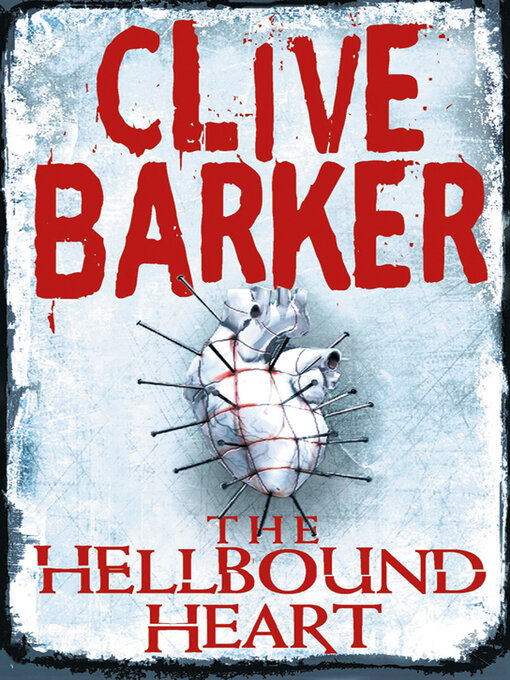
First of all, just look at this cover and tell me that's not twisted. I had the book for a week before I happened to glance at it upside-down, and nearly wet myself in fright. And the story's not half-bad either, a sado-masochistic romp through the depraved desires of man and woman, governed by those guardians of pain known as the cenobites. Made famous by Barker's own cinematic adaptation Hellraiser, The Hellbound Heart is deeply warped stuff, bloody, slimy, and unpleasant. When you're done, you might consider renting the movie, or instead go on to Barker's Books of Blood, Cabal, or The Damnation Game, and revel in one of modern literature's true giants of imagination and perversity. Let's hope Barker's long-rumoured follow-up The Scarlet Gospels is a return to form after his lengthy (but admittedly terrific) forays into fantasy.


Hell House by Richard Matheson -
Every Halloween needs a haunted house story, and while some may choose The Shining or The Haunting of Hill House (both vastly worthy of your time), Hell House is my choice for full-bore balls-to-the-wall horror. Other houses may be haunted, but this one is mean. And it doesn't like you. Much like The Haunting of Hill House, Hell House concerns itself with a group of researches studying a supposed 'haunted house' for signs of the paranormal. Unlike The Haunting of Hill House, Matheson adds explicit imagery and shocks, going for ectoplasmic scares instead of subtlety.


Summer of Night by Dan Simmons -
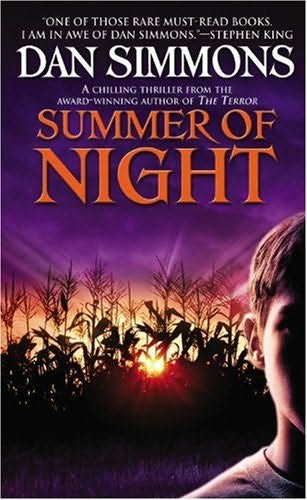
Dan Simmons is a monster. He can write absolutely anything and make it work. His science-fiction (epitomized by Hyperion) is spectacular. His mystery novels are first-rate noir. And his horror? Sheesh, Song of Kali is as evil as they come, and his last novel The Terror was, well, bloody terrifying. But Summer of Night is, for my money, the best evocation of childhood nostalgia and terror since Stephen King's IT, maybe even better (but it's hard for me to find fault with IT, I do love it so). This one works the screws so lovingly, so precisely, that when those kids enter that house for the last time, you will not stop reading until the very end. And it's a pretty thick book.


Monster Island by David Wellington, The Rising by Brian Keene, and World War Z by Max Brooks -
All Hallow's Eve is just not the same without a visit from the undead. And I mean the real undead: rotted, bloating corpses who feast on human brains, not these increasingly emo Twilighty vampires who just mope about wanting to be loved, dammit! Thanks a lot for that, Anne Rice. [That said, I've heard nothing but good things about the recent HBO vamps-with-problems series True Blood.] I want scares, and there's nothing scarier than a shambling corpse. All three of these novels deal with zombies in the proper way - no negotiations, no motivations, shoot 'em in the head before they get you first. The Rising takes it's cue from the apocalptic sensitibilites of George Romero's epic, seminal Living Dead film series [but please ignore Diary of the Dead; sheesh, what a blowful waste of film, George, what were you thinking?] - there's no hope, all is lost, and humanity crumbles. Kind of like Jose Saramago's Blindness, but with dead people coming to life in place of loss of sight. Monster Island is more slam-bang, and there's a decided hint of the Resident Evil videogames in its chase scenes and big boss bad guys. World War Z is likely the most realistic attempt ever at documenting a true catastrophe with its corresponding miltary response; as a consequence, it's the best written but least fun of the three. Nevertheless, all three provide copious amounts of gore, and are sure to bring about nightmares.
Runners up: Stephen King's Pet Semetary and Cell. Semetary is King's grisliest, bleakest novel, unrelenting in its utter despair. Plus, it has the undead, but by the tenets on the genre, it's not technically a zombie novel. Cell is definitely zombie-centric, but it falls apart half-way through, and again, they aren't technically zombies in the classic sense. The first half is as gory and suspenseful as anything he's ever written, however.


Stinger by Robert R. McCammon -
Stinger is McCammon's love letter to the monster b-movie. An alien being crashes to Earth, followed soon after by another extra-terrestrial of a far more unpleasant sort, a being able to adapt and alter its form to whatever it chooses. And what it chooses usually results in mass chaos and deaths galore. Echoes of The Thing (the John Carpenter version) are purely intentional; this is a pulpy ode to everything we love about monster movies. The fact that it has not been made into a film is ridiculous, as if there was ever a novel that cried out for a worthy director to adapt it, this is it. I'm thinking James Gunn or Robert Rodriguez to bring out the fun as well as the ooze.


Last Days by Brian Evenson -
Evenson's novel (due out in early 2009) concerns horrors of a different sort; the paranoia and despair that accompanies the feeling of having no idea what is going on. Absolutely bizarre does not begin to describe the plot, as a cop finds himself embroiled in a mysterious cult of amputees who won't tell him what he's expected to do, or how he can expect to extricate himself from their clutches. Needless to say, things get confusing, and bloody. Evenson expertly plays with the tension, resulting in an ending as weird and strangely affecting as any since
I Am Legend (see below). Last Days is best described as a nightmarish co-mingling of Franz Kafka and Clive Barker. David Lynch, a horror director who had never actually directed a horror film, should be tapped to direct the adaptation posthaste.


I Am Legend by Richard Matheson -
A two-fer for Matheson! Just realized that I actually had no vampires on this list, and a Halloween without vampires is like peanut butter without jelly, chili without beer, Tim Burton without Johnny Depp, etc. I'll be the first to admit that
Dracula never rocked my boat; I found it dull and uninspired, and the debut movie version (Bela Lugosi) is plain and simple boring. You want great B&W horror from the same time, James Whale's Frankenstein and Bride of Frankenstein are your bets. Comparing Whale's masterpieces to Tod Browning's achingly poor adaptation is like comparing Hitchcock to Uwe Boll. Ok, that came across as mean. Anyway, I never cared for the initial bloodsucker, but his reputation lives on, and at least (for me) some superlative offshoots resulted from Stoker's snoozefest. Legend is the best, a fast, gritty, and surprisingly poignant apocalyptic tale of the last human on Earth, beset on all sides by vampires galore. And while the Will Smith movie had its moments, it blew it by the end. This is a story crying out for a lean, low-budget, Night of the Living Dead esthetic, not, I repeat, not big-budget bombast.
Runner-up:
'Salem's Lot. Stephen King's best pure horror story. These are vampires as they were meant to be; monsters, pure and simple.

Related Posts Plugin for WordPress, Blogger...