The border gave Danny a start.
Yellowknife by Steve Zipp
"Ladies and Gentlemen, behold: The Enemy."
The Cheese Monkeys by Chip Kidd
When Paul sat down on the bench, the young man moved over a bit without looking at him.
Everyone in Silico by Jim Munroe

Mar 28, 2008


Save the hipsters!
If you're like me, how do you live with yourself?

Ok, start again.
If you're like me, you were a fan of the CBC's recent series jPod, based on the novel by Douglas Coupland. It was weird, strange, satirical stuff, and while not always perfect, it made me laugh, which is a far cry from most things the CBC airs. I'm looking at YOU, cast of Air Farce! You're not funny! Stop it!
So, unsurprisingly, CBC cancelled it. But in the spirit of the Internet hack hipsters of jPod, let's get off our duffs and sign an online petition to get it back. It worked for Jericho, and jPod doesn't have the mopey Skeet Ulrich hanging about.
Sign the petition here. Let's get a good show back. That, or cancel Air Farce. Hmm, maybe a petition...
Mar 21, 2008
His Illegal Self by Peter Carey - review
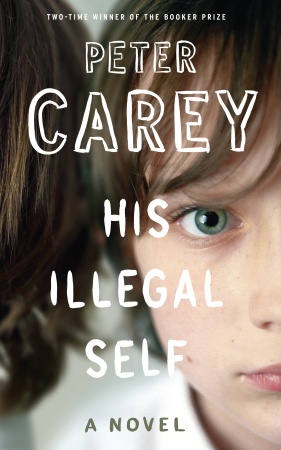 His Illegal Self
by Peter Carey
Peter Carey is no stranger to accolades. In addition to writing nine best-selling novels and winning the Commonwealth Writers’ Prize, the Australian-born author has twice received the famed Man Booker Prize for his works Oscar and Lucinda and The True History of the Kelly Gang.
It may be premature at this point to suggest that Carey think about preparing more room on his trophy shelf. Whether it wins any awards or not, the fact remains that his newest novel, His Illegal Self – a brilliantly unsentimental fiction about trust, love, and dishonesty – is a spectacular return to form after the uneven duo of My Life as a Fake and Theft.
His Illegal Self primarily concerns itself with two characters, Che and Dial. Che is a privileged young boy in 1970s New York, raised by his grandmother in a repressive atmosphere of isolation, kept away from radios or televisions for reasons “as tangled as old nylon line, snagged with hooks and spinners and white oxidized lead weights.”
The rationale soon becomes apparent with the arrival of Dial (short for dialectic), a seemingly freewheeling spirit Che automatically assumes is his mother come back to claim him. This error only becomes one of many, as the pair soon discovers themselves on the run, victims of misunderstanding, misinformation, and plain bad luck.
Their convoluted path eventually leads them to Australia, specifically Queensland, “a police state run by men who never finished high school.” Taking up residence in a dilapidated area of farmland, Che and Dial come up against the triple terrors of punishing climate, anti-American attitudes, and each other’s convoluted feelings toward the other.
To give away more would be to destroy much of the pleasure of Carey’s tale, a wide-ranging chase story that nevertheless achieves a shivering intimacy. Che and Dial, two of the most intriguing literary characters in recent memory, are a pair firmly entrenched in Carey’s adoration of the misfits and outsiders in society, victims of circumstance
Che may be one the finest characters Carey has yet created, and one of the most fully realized representations of a child in modern literature. Innocent and bright, stubborn yet never precocious, nervy yet uncomprehending, Che firmly belongs in the pantheon of great fictional children alongside Roddy Doyle’s title character Paddy Clarke Ha Ha Ha and Wayne Johnston’s Draper Doyle in The Divine Ryans.
After the somewhat constrained Theft, Carey feels loose and invigorated, wielding his command of storytelling with elation and deftness. His deceptively muted language, “some words as plain as pebbles, many more that [hold] their secrets like the crunchy bodies of wasps or grasshoppers,” is a joy to read.
Yet despite this newfound release, His Illegal Self never loses control and become a showcase for Carey’s cleverness. He keeps an even hand on the more bizarre turns, and even as the narrative flows into disquieting tragedy and tears, the emotional knot of Che and Dial remains the novel’s touching core.
His Illegal Self is a wonderful novel, Carey’s best since The Unusual Life of Tristan Smith. If, as hinted throughout the pages, there is more to tell about Che’s life, Carey had best take his time on the sequel. His Illegal Self is too good to soil with a lesser follow-up.
Originally published in the Winnipeg Free Press.
Mar 17, 2008
It's the wearing of the green!
In honour of St. Patrick's Day, I hereby give you the greatest rendition of "Danny Boy" ever recorded.
Thanks to BoingBoing for unearthing this piece of Irish wonderment.
Thanks to BoingBoing for unearthing this piece of Irish wonderment.
Mar 16, 2008


Things on my admittedly addlepated mind
1) How does Jessica Alba keep getting work? She can't act, yet she keeps popping up in every fourth film lately. She's awful, and we all know she's awful.
2) I've seen it five times, and I'll make this claim: Ang Lee's Hulk is one of, if not the, best superhero movies ever. And the Ed Norton sequel is going to suuuuuuuuuck. Sorry, Ed, I loves you, but it's true. But as my cousin Andrew worked as a set designer, I'll see it anyway. Begrudgingly.
3) Iron Man, on the other hand, will rock.
4) When, oh when, will Clive Barker publish The Scarlet Gospels?
5) I wish Christian Bale would smile once in a while.
6) Jaws still frightens the bejesus out of me.
7) I don't want to be old.
8) Why do I enjoy Uwe Boll films? Is it masochism? Do I hate myself that much?
9) Lydia Millet is a wonderful writer, and by extension, a wonderful human being.
2) I've seen it five times, and I'll make this claim: Ang Lee's Hulk is one of, if not the, best superhero movies ever. And the Ed Norton sequel is going to suuuuuuuuuck. Sorry, Ed, I loves you, but it's true. But as my cousin Andrew worked as a set designer, I'll see it anyway. Begrudgingly.
3) Iron Man, on the other hand, will rock.
4) When, oh when, will Clive Barker publish The Scarlet Gospels?
5) I wish Christian Bale would smile once in a while.
6) Jaws still frightens the bejesus out of me.
7) I don't want to be old.
8) Why do I enjoy Uwe Boll films? Is it masochism? Do I hate myself that much?
9) Lydia Millet is a wonderful writer, and by extension, a wonderful human being.
Mar 15, 2008
Novels, superheroes, and Canuck sensibilities
I love superhero movies (I even willingly watched Ghost Rider), and eagerly await this summer's upcoming releases; Iron Man, The Dark Knight, and Hellboy II will undoubtedly kick all kinds of butt. Possibly also The Incredible Hulk, but I'm not getting that vibe from the less-than-incredible trailer. That, and I am of the opinion that Ang Lee's original Hulk is one of the finest (and unappreciated) examples of superhero movies ever, and substituting Lee with the director of Unleashed does not exactly fill me with hope. Kind of like when Brent Ratner was pegged to direct Red Dragon.
With that in mind, I've been perusing the landscape for some novels to help get me primed and ready. And since I'm nothing if not patriotic (is that derisive laughter I hear?), let's look at some Canadian literary examples of superhero mythology.
 From the Notebooks of Dr. Brain
by Minister Faust
This is, on the surface, the most stereotypical entry, a slam-bang action-fest rife with physical improbabilities, invincible individuals, and dastardly evil goings-on. Like the recent American novel Soon I Will be Invincible by Austin Grossman (a terrific read, by the way), Faust both embraces the mythological stereotypes of the superhero genre, and playfully tweaks the reader's expectations through treating them as flawed human beings. The results are hysterical. De-mythologizing the superhero has been an accepted trend since Alan Moore revolutionized comic books and superhero teams with The Watchmen and Frank Miller pulled Batman back from the brink of self-parody with The Dark Knight Returns, and Faust's novel stands equal to such classics.
Dr. Brain is indeed from the notebooks of Dr. Eva Brain-Silverman, a psychoanalyst who specializes in the mysterious world of the specially-abled. She is the analyst of F*O*O*J* (Fantastic Order of Justice), a league of superheroes rendered dysfunctional and impotent after the legendary "Götterdämmerung" left most of the world's supervillains dead, and most of the world's superheroes out of a job. As she probes the minds of Omnipotent Man, The Flying Squirrel, Power Grrrl, Iron Lass, X-Man, and The Brotherfly, it turns out that dysfunction does not target only the normal.
Like the best comic books and graphic novels, Dr. Brain can be read as a kick-ass actioneer or, if you prefer, as a sly satire of our world. Faust is not exactly subtle with the metaphors; racism, paranoia, and xenophobia are all staples of the superhero subculture, and Dr. Brain follows this path fairly closely. What Faust brings to the party is intricately funny word-play, ingenious plot developments, and true love for his subject matter. And fun. Man, is this fun.
Grade - A-
 All My Friends are Superheroes
by Andrew Kaufman
All My Friends is as far away conceptually from Dr. Brain as any superhero novel could be. Instead of the spectacular antics of Omnipotent Man and Iron Lass, Kaufman offers up The Frog-Kisser ("blessed with the ability to transform geeks into winners") and The Sloth (my personal favourite, an individual armed with "an amazing ability to say 'Fu@# it' and really, truly mean it"). Clearly, we are in a different realm of powers here.
Tom does not have superpowers, but his wife The Perfectionist does. She can will order with her mind. Unfortunately, he is invisible to her due to the jealous shenanigans of jilted superhero Hypno, and nothing Tom does can make her see him.
I've had a few people comment on All My Friends since I blogged that I was reading it. It turns out to have quite a rabid following, and it's easy to see why. Deft, amusing, endlessly quotable and charming as hell, Kaufman has crafted a love letter to love itself. It's a slight novella, but no less compelling for its brevity. It's light on the heroics, but near-perfect in execution.
Grade - A
 Flyboy Action Figure Comes With Gasmask
by Jim Munroe
In a review of Shelf Monkey, one astute blogger labeled it as being written in "the Canadian Indie Style. Some of you may not be familiar with it (although if you've read Flyboy Action Figure Comes With Gasmask, or really anything else by Jim Munroe, you've definitely encountered it)...It's self-consciously casual to the point of seeming forced. The authors tend to have large vocabularies, but rarely use them effectively. Technique is virtually irrelevant, with plot and overt character development being nearly the only concerns. The narrators are self-deprecating, misunderstood, inwardly aggressive but outwardly meek. The women who serve as love interests for these characters are uniformly aggressive, beautiful, artistic, sporting an unusual name, and often (though not always) bisexual. Quirky isn't the word." I'd like to protest, as I believe Douglas Coupland began the Canadian quirk trend, but as I hadn't ever read Coupland until after I had finished my first draft, I suppose I'm guilty as charged. And I like aggressive women. But it doesn't change the fact that Flyboy Action Figure is a heck of a good time.
Flyboy takes the road between Dr. Brain and All My Friends, presenting the possibility of possessing true superpowers in a realistic setting, a precursor to more muted (but no less entertaining) examinations of superpowers such as M. Night Shyamalan's remarkable film Unbreakable and Jonathan Lethem's spectacular novel The Fortress of Solitude. In modern-day Toronto, Ryan (who can turn himself into a fly) and Cassandra (a waitress who can make things disappear - not reappear, mind you) take it upon themselves to challenge the tabloid newspapers (think a paper which rhymes with Bational Boast), as well as other bastions of conservative propaganda.
Flyboy is not exactly deep, nor subtle, but Munroe brings rich characterizations and skewed wit to what is admittedly a very strange genre. If Coupland is the godfather of Canadian quirk, then Munroe is that fun-loving uncle you wish would visit more often.
Grade - B+
Alright, I'm primed and ready. Bring on the genetically-superior beings!
With that in mind, I've been perusing the landscape for some novels to help get me primed and ready. And since I'm nothing if not patriotic (is that derisive laughter I hear?), let's look at some Canadian literary examples of superhero mythology.
 From the Notebooks of Dr. Brain
by Minister Faust
This is, on the surface, the most stereotypical entry, a slam-bang action-fest rife with physical improbabilities, invincible individuals, and dastardly evil goings-on. Like the recent American novel Soon I Will be Invincible by Austin Grossman (a terrific read, by the way), Faust both embraces the mythological stereotypes of the superhero genre, and playfully tweaks the reader's expectations through treating them as flawed human beings. The results are hysterical. De-mythologizing the superhero has been an accepted trend since Alan Moore revolutionized comic books and superhero teams with The Watchmen and Frank Miller pulled Batman back from the brink of self-parody with The Dark Knight Returns, and Faust's novel stands equal to such classics.
Dr. Brain is indeed from the notebooks of Dr. Eva Brain-Silverman, a psychoanalyst who specializes in the mysterious world of the specially-abled. She is the analyst of F*O*O*J* (Fantastic Order of Justice), a league of superheroes rendered dysfunctional and impotent after the legendary "Götterdämmerung" left most of the world's supervillains dead, and most of the world's superheroes out of a job. As she probes the minds of Omnipotent Man, The Flying Squirrel, Power Grrrl, Iron Lass, X-Man, and The Brotherfly, it turns out that dysfunction does not target only the normal.
Like the best comic books and graphic novels, Dr. Brain can be read as a kick-ass actioneer or, if you prefer, as a sly satire of our world. Faust is not exactly subtle with the metaphors; racism, paranoia, and xenophobia are all staples of the superhero subculture, and Dr. Brain follows this path fairly closely. What Faust brings to the party is intricately funny word-play, ingenious plot developments, and true love for his subject matter. And fun. Man, is this fun.
Grade - A-
 All My Friends are Superheroes
by Andrew Kaufman
All My Friends is as far away conceptually from Dr. Brain as any superhero novel could be. Instead of the spectacular antics of Omnipotent Man and Iron Lass, Kaufman offers up The Frog-Kisser ("blessed with the ability to transform geeks into winners") and The Sloth (my personal favourite, an individual armed with "an amazing ability to say 'Fu@# it' and really, truly mean it"). Clearly, we are in a different realm of powers here.
Tom does not have superpowers, but his wife The Perfectionist does. She can will order with her mind. Unfortunately, he is invisible to her due to the jealous shenanigans of jilted superhero Hypno, and nothing Tom does can make her see him.
I've had a few people comment on All My Friends since I blogged that I was reading it. It turns out to have quite a rabid following, and it's easy to see why. Deft, amusing, endlessly quotable and charming as hell, Kaufman has crafted a love letter to love itself. It's a slight novella, but no less compelling for its brevity. It's light on the heroics, but near-perfect in execution.
Grade - A
 Flyboy Action Figure Comes With Gasmask
by Jim Munroe
In a review of Shelf Monkey, one astute blogger labeled it as being written in "the Canadian Indie Style. Some of you may not be familiar with it (although if you've read Flyboy Action Figure Comes With Gasmask, or really anything else by Jim Munroe, you've definitely encountered it)...It's self-consciously casual to the point of seeming forced. The authors tend to have large vocabularies, but rarely use them effectively. Technique is virtually irrelevant, with plot and overt character development being nearly the only concerns. The narrators are self-deprecating, misunderstood, inwardly aggressive but outwardly meek. The women who serve as love interests for these characters are uniformly aggressive, beautiful, artistic, sporting an unusual name, and often (though not always) bisexual. Quirky isn't the word." I'd like to protest, as I believe Douglas Coupland began the Canadian quirk trend, but as I hadn't ever read Coupland until after I had finished my first draft, I suppose I'm guilty as charged. And I like aggressive women. But it doesn't change the fact that Flyboy Action Figure is a heck of a good time.
Flyboy takes the road between Dr. Brain and All My Friends, presenting the possibility of possessing true superpowers in a realistic setting, a precursor to more muted (but no less entertaining) examinations of superpowers such as M. Night Shyamalan's remarkable film Unbreakable and Jonathan Lethem's spectacular novel The Fortress of Solitude. In modern-day Toronto, Ryan (who can turn himself into a fly) and Cassandra (a waitress who can make things disappear - not reappear, mind you) take it upon themselves to challenge the tabloid newspapers (think a paper which rhymes with Bational Boast), as well as other bastions of conservative propaganda.
Flyboy is not exactly deep, nor subtle, but Munroe brings rich characterizations and skewed wit to what is admittedly a very strange genre. If Coupland is the godfather of Canadian quirk, then Munroe is that fun-loving uncle you wish would visit more often.
Grade - B+
Alright, I'm primed and ready. Bring on the genetically-superior beings!
Mar 14, 2008
First sentence of novels I'm reading, Friday, March 14, 2008
Of all the rash and midnight promises made in the name of love none, Boone now knew, was more certain to be broken than: "I'll never leave you."
Cabal, Clive Barker
Let's sing about the man there
at the breakfast table
brown skin, thin features, white T,
his olive hands making endless circles
in the classifieds
"wanted" "wanted" "wanted"
small jobs little money
but you have to start somewhere.
Sharp Teeth, Toby Barlow
I don't believe in God, but I miss him.
Nothing to be Frightened Of, Julian Barnes
Cabal, Clive Barker
Let's sing about the man there
at the breakfast table
brown skin, thin features, white T,
his olive hands making endless circles
in the classifieds
"wanted" "wanted" "wanted"
small jobs little money
but you have to start somewhere.
Sharp Teeth, Toby Barlow
I don't believe in God, but I miss him.
Nothing to be Frightened Of, Julian Barnes
Mar 12, 2008
What my blog is worth

My blog is worth $10,161.72.
How much is your blog worth?

Mar 8, 2008
First sentence of novels I am reading, March 8, 2008
"Tom and the Perfectionist sit in the designated waiting area of Gate 23, Terminal 2, Lester B. pearson International Airport."
- All My Friends Are Superheroes, Andrew Kaufman
"His first idol was Andrew Jackson."
- How the Dead Dream, Lydia Millet
- All My Friends Are Superheroes, Andrew Kaufman
"His first idol was Andrew Jackson."
- How the Dead Dream, Lydia Millet
Mar 3, 2008
Europe, you have my greatest respect
Ah, Europe. What more is there to say, but MAN am I glad to be back. To quote Scott Thompson; "Europe was exhausting. Everything's at the top of a hill."
We took tons o'pics, but I'm too tired to show them all. Here's a representative sampling:
 Myself, weirdly underwhelmed by Budapest Parliament.
 Shelf Monkey enjoys a grand day out.
We took tons o'pics, but I'm too tired to show them all. Here's a representative sampling:
 Myself, weirdly underwhelmed by Budapest Parliament.
 Shelf Monkey enjoys a grand day out.
Star Wars titles get a reworking
I love a good title sequence. Sometimes, they're the best part of the film. Think of Se7en's amazing tapestry of skip-jump edits and jangled music, or Alien's slow, methodical titles over the strange expanse of space.
As many film aficionados may know, Saul Bass was a legendary art director who designed many of the greatest, most eye-catching title sequences in American film history. When you think of Vertigo or Psycho, you inevitably remember the bizarre titles that capture the spirit of the piece. His last work, I believe, was for Martin Scorsese's remake of Cape Fear.
Some enterprising person has seen fit to redo the Star Wars title sequence as Saul Bass might have done during his 1960s heyday. Give it a look. I personally love it.
As many film aficionados may know, Saul Bass was a legendary art director who designed many of the greatest, most eye-catching title sequences in American film history. When you think of Vertigo or Psycho, you inevitably remember the bizarre titles that capture the spirit of the piece. His last work, I believe, was for Martin Scorsese's remake of Cape Fear.
Some enterprising person has seen fit to redo the Star Wars title sequence as Saul Bass might have done during his 1960s heyday. Give it a look. I personally love it.
Subscribe to:
Posts (Atom)
