Time for the spooks and scares, folks. This Friday is Halloween, and while I think we can all agree that it's not what it used to be, we can still have a good old time with a scary flick or two.
I thought, instead of simply a list of my favourite horror films, I'd take a little time and discuss those specific scenes that, for one reason or another, caused me to soil myself. These are the little snippets of film that traumatized me the deepest, and left me the bitter, cynical wreck I am today, God love 'em.
NOTE: I'll have a clip when I can, but likely as not, these scenes may not be suitable for all viewers. Please show some respect to your co-workers. Also, while these scenes terrified me, in clip format the impact may be somewhat lessened. But in the context of the movie as a whole (which is how every scene in every movie should be discussed), these scenes forced childish screams from me.
It goes without saying (but here I am saying it) that spoilers are indeed ahead.
So, in no particular order:
1) JAWS - the pond attack.
This was the first attack by Spielberg's mechanical beast where the shark was glimpsed. That first image, the man scrambling to get out of the water onto the boat, the blurred head of the shark just beneath the surface pulling him under...I still hate deep water. Hate it hate it hate it. This was one of my first experiences with cinematic terror, and I still get nervous when I watch the film alone.
2) THE EXORCIST III - the hospital hallway attack.
This under-appreciated second sequel to one of the seminal horror films of all time contained one absolute doozy of a suspenseful scene. The nurse works in silence. The camera tracks back and forth down the hallway. Nothing happens. Nothing happens. For minutes, nothing happens. Then - BAM! I screamed in the theatre, and believe me, I was not alone. William Peter Blatty (the author of the novel The Exorcist) has directed only two films, and this scene proved to me that he should direct more.
The scene begins at 5:06 on the following clip:
3) MULHOLLAND DRIVE - the diner scene.
David Lynch has never directed a full-bore horror movie, and for good reason; it would likely be unwatchable in its intensity. Has any other director gotten such suspense out of dark rooms? But in Mulholland Drive, the scene is far different from Lynch's penchant for black backgrounds and red velvet curtains. In this scene, two gentlemen meet in a diner, and one describes a dream he had. He talks about having the conversation he's having now, and then walking outside to a wall. At the end of the wall, a man appears. That's the dream. Then the men walk outside, and the entire dream occurs. Lynch tells you specifically what is going to happen ahead of time, and then shows you, and somehow he makes it terrifying.
4) THE THING - the walking head.
We need some gore here, and John Carpenter's nihilistic classic has buckets of it. In this scene, a member of the arctic team has a heart attack, and in the course of applying a defibrillator, the movie reveals the man to be infected with the alien. The scene up to that point is grotesque and horrifying, as the alien is set ablaze. But the worst is to come: the man's head detaches itself from the body, sprouts legs, and scuttles away. For an overly impressionable fifteen-year-old, this was the ultimate amalgamation of gross and cool. See also; Cronenberg's The Fly. That movie freaked me right out.
WARNING: DEFINITELY NOT FOR KIDS!
5) MONTY PYTHON AND THE HOLY GRAIL - the rabbit.
A little backstory is necessary here, as obviously Holy Grail is not a horror movie. But my parents had gone out to see the film, and had taken along me, a tyke of approximately three years of age. The majority of the film went right over my head, but that rabbit, that damnable rabbit haunted me for decades. I had never seen so much blood, so much gore, and I had nightmares for years. I never understood where they came from, and it was only when I was seventeen or so did I watch the film again. When I saw that scene, everything came flooding back. I tell you, the rabbit was a subconscious deliverer of everything evil to me (followed closely by the Legendary Black Beast of Arrrggghhh).
6) SCANNERS - exploding head.
How could I fail to mention this, the most startling effect I'd ever seen up to that date. Still a classic. Plus, it began my lifelong love affair with all things Michael Ironside.
7) 20,000 LEAGUES UNDER THE SEA - giant squid!
Sure, it's more of a family film, but it's still one of the best family movies Disney ever produced. And that squid? Disney has NEVER filmed a cooler scene. Ever.
8) INDIANA JONES AND THE TEMPLE OF DOOM - insects galore!
I have a real bug phobia, I admit it. And this scene took me many, many tries to get through without squirming.
9) INVASION OF THE BODY SNATCHERS (1978) - the ending.
This is one of those rare instances where the remake is superior to the original, which was damn fine to begin with. Director Philip Kaufman expands on Don Siegel's original vision, and keeps intact Siegel's original vision of a downer ending. There's Donald Sutherland, on a planet where he may be the only true human left. Veronica Cartwright sees him on a street, and motions to him. They're still human, right? And then, that godawful screech from Sutherland's mouth. He's an alien. Either he gave up, or he was overcome. Man, what a depressing finale, and one of the most haunting endings in film.
Start at about 7:12 into this clip.
And there you have it.
What about you? Any favourite scenes I missed?

Oct 27, 2008


Oct 22, 2008
"You have really big glasses."
Ah, literalism, how I love you so. One of my favourite '80s videos, and it's in a library, hence the tenuous connection to the more literary aspects of this blog.
Thanks to Nikki Stafford for the link.
See more funny videos at Funny or Die
Thanks to Nikki Stafford for the link.
Oct 15, 2008
A glossary for the lit-set
There's a pretty fine (but sadly incomplete) glossary of new terms for those among us with a literary bent.
Some highlights:
Some highlights:
memoir: From the Latin memoria, meaning “memory,” a popular form in which the writer remembers entire passages of dialogue from the past, with the ultimate goal of blaming the writer’s parents for his current psychological challenges.
novel: A quaint, longer form that fell out of fashion with the advent of the memoir.
clandestine science fiction novel: A work set in the future that receives a strong reception from the literary world as long as no one mentions that it is, in fact, science fiction; for example, The Road, winner of the Pulitzer Prize.
pop culture essay: An essay written by someone who prefers to shop or watch television.
Read the rest here, and thanks to Bookninja for the link.
Oct 9, 2008
A quad of reviews -Paul Auster, Sky Gilbert, Brian Evenson, Clifford Chase
Just some quick reviews today, to clear out the pile. But they're all good novels, with one certainly earning a berth on my all-time favourites list.
 Man in the Dark
Paul Auster
Henry Holt, 2008
Paul Auster is a novelist known for taking chances. His New York Trilogy is a classic of post-modernist weirdness. The Music of Chance is a sterling character study. The Book of Illusions is a spectacular, romantic ode. Auster is not known for shying away from a challenge. But Man in the Dark is unusual even by those standards.
Grade: B+
 Brother Dumb
Sky Gilbert
ECW Press, 2007
Who is Brother Dumb? Many have speculated, but the best guess as to the identity of the famous yet unnamed memoirist Canadian author Sky Gilbert brings to life is J.D. Salinger. He makes mention of his initials, his sporadic output, his past marriages, his forays in religion; I'm no Salinger expert, but the parallels between Brother Dumb and Salinger are stark and unmistakeable. I don't know why Gilbert would choose not to mention Salinger by name, but considering Salinger's penchant for suing people who use his name (see his famous wranglings with W.P. Kinsella over Kinsella's use of Salinger as a character in his novel Shoeless Joe), it's a safe bet that Gilbert did not want the hassle.
Grade: A-
 Last Days
Brian Evenson
Underland Press, 2009
This novel hasn't yet been released, but I can't imagine Brian Evenson being annoyed at some pre-publication praise.
Ostensibly a mystery, Last Days concerns the travails of Kline, a police officer who has recently been parted from his hand (and not by choice). After a series of mysterious phone calls, Kline is forcibly convinced by a strange duo to return with them to their compound, as he is the only person capable of solving a crime. What the crime actually is differs from person to person. Oh, and every individual Kline meets is missing at least one body part. And they parted from their appendages most willingly. I don't wish to give too much away, but when you learn from the publisher that Last Days is a lengthening of Evenson's short story "The Brotherhood of Mutilation," you kind of get a hint as to where it might be headed.
The cover copy presents Last Days as a "down-the-rabbit-hole detective mystery," and like Alice in Wonderland, Kline finds that his presumptions concerning morality and freedoms mean nothing in the situation he is in. Correspondingly, the reader is left as ignorant as Kline, and can only hold on. Last Days falls squarely in the genre of 'the condemned man who has not been told the charges', and is a sterling example of paranoid fiction.
What is Last Days about? Is is a condemnation of fanaticism? Certainly, the acts of Kline's abductors are cult-like, but Evenson is more concerned with keeping the reader off-guard with left turns, misdirection, and some gut-churning violence. It goes without saying, I dug it a lot. Evenson's plot is unsettling and eerie, an equal mixture of Franz Kafka and David Lynch. As Kline winds himself deeper and deeper into Evenson's labyrinth (is the book really only 170+ pageslong?), his options for extricating himself become fewer, especially when he finds himself between warring factions. The ultimate ending, a complete abandonment of the self, is severe and uncompromising, somehow reminding me of the bleak despair of the finale of Richard Matheson's I Am Legend, as Neville submits to his fate and becomes the monster.
Last Days is gruesome, perplexing, reprehensible, cruel, and freaking marvelous. I'll be tracking down Evenson's other novels ASAP.
When I stopped and thought about it, I was struck not so much by how much Winkie reminded me of the works of William Kotzwinkle, but more by how few authors use Kotzwinkle as a template. Kotzwinkle has been a preeminent satirist for much of his writing career, and many could learn from his unique sensibilities. Yes, it's all well and good to emulate Vonnegut (register him for sainthood, in my opinion), but Kotzwinkle's novels offer delights both sublime and ridiculous. As does Winkie, a charming, shaggy, ultimately heart-rending tale of the yearning for freedom in a society that craves its scapegoats.
Winkie is a teddy bear with a dream: freedom. After decades of entrapment as a immobile object, Winkie takes it upon himself to leap to his feet and take action, running to the woods, living off the land, and somehow giving birth to a daughter, Baby Winkie. However, fate is indeed cruel, as Winkie becomes mistaken for a unabomber-style terrorist and is tried in a kangaroo court so outrageous it makes the Guantanamo trials seem reasonable and well considered.
 Man in the Dark
Paul Auster
Henry Holt, 2008
Paul Auster is a novelist known for taking chances. His New York Trilogy is a classic of post-modernist weirdness. The Music of Chance is a sterling character study. The Book of Illusions is a spectacular, romantic ode. Auster is not known for shying away from a challenge. But Man in the Dark is unusual even by those standards.
It all takes place in the space of one night. August Brill is an author recuperating from injuries sustained in a car accident. As he suffers through a sleepless night, he thinks up a story in an alternate timeline, where the twin towers never fell, and the U.S. has been split in a civil war over the Bush-Gore vote debacle. As the night wears on, the plot progresses, only to be abandoned by Brill as his grand-daughter starts up a conversation about the murder of her boyfriend.
Even by Auster standards, the plot of Man in the Dark beggars description. It has little form, and doesn't resolve itself rather than merely end as the sun comes out. But Auster isn't being lazy; he uses the rambling narrative as a device to touch on issues such as war, love, fear, and hope. In one night, Brill covers much of what North Americans habitually stress themselves into knots over. There are no clear-cut answers, and Auster doesn't pretend to have a solution. "The weird world rolls on," one character mutters, and that's as good a summation of Auster's alternately frustrating and magical novel as any.
Grade: B+
 Brother Dumb
Sky Gilbert
ECW Press, 2007
Who is Brother Dumb? Many have speculated, but the best guess as to the identity of the famous yet unnamed memoirist Canadian author Sky Gilbert brings to life is J.D. Salinger. He makes mention of his initials, his sporadic output, his past marriages, his forays in religion; I'm no Salinger expert, but the parallels between Brother Dumb and Salinger are stark and unmistakeable. I don't know why Gilbert would choose not to mention Salinger by name, but considering Salinger's penchant for suing people who use his name (see his famous wranglings with W.P. Kinsella over Kinsella's use of Salinger as a character in his novel Shoeless Joe), it's a safe bet that Gilbert did not want the hassle.
Anyway, the novel is not presented as a mystery to be solved: instead, it's a character study of a man who considers himself humble but is anything but; who says he has a love of people but hates everyone he meets; who yearns to be a silent monk ("Brother Dumb") but in reality cannot shut up. Gilbert's author is a crank, a crotchety old man, and it's no mean feat that Gilbert manages to make the coot likable.
Gilbert's pseudo-memoir is a study in loneliness, and an unflinching portrayal of the temperament of the artist. The author never apologizes for who he is, and indeed, cares far more for his fictional creations than his flesh-and-blood acquaintances. There's undeniable pathos in Gilbert's exploration of how far man will go to have his real life emulate his imagination. The author is a lonely, lonely man, and mostly of his own choosing, but if he's insufferable as a person, he's wonderfully entertaining as a character.
Grade: A-
Last DaysBrian Evenson
Underland Press, 2009
This novel hasn't yet been released, but I can't imagine Brian Evenson being annoyed at some pre-publication praise.
Ostensibly a mystery, Last Days concerns the travails of Kline, a police officer who has recently been parted from his hand (and not by choice). After a series of mysterious phone calls, Kline is forcibly convinced by a strange duo to return with them to their compound, as he is the only person capable of solving a crime. What the crime actually is differs from person to person. Oh, and every individual Kline meets is missing at least one body part. And they parted from their appendages most willingly. I don't wish to give too much away, but when you learn from the publisher that Last Days is a lengthening of Evenson's short story "The Brotherhood of Mutilation," you kind of get a hint as to where it might be headed.
The cover copy presents Last Days as a "down-the-rabbit-hole detective mystery," and like Alice in Wonderland, Kline finds that his presumptions concerning morality and freedoms mean nothing in the situation he is in. Correspondingly, the reader is left as ignorant as Kline, and can only hold on. Last Days falls squarely in the genre of 'the condemned man who has not been told the charges', and is a sterling example of paranoid fiction.
What is Last Days about? Is is a condemnation of fanaticism? Certainly, the acts of Kline's abductors are cult-like, but Evenson is more concerned with keeping the reader off-guard with left turns, misdirection, and some gut-churning violence. It goes without saying, I dug it a lot. Evenson's plot is unsettling and eerie, an equal mixture of Franz Kafka and David Lynch. As Kline winds himself deeper and deeper into Evenson's labyrinth (is the book really only 170+ pageslong?), his options for extricating himself become fewer, especially when he finds himself between warring factions. The ultimate ending, a complete abandonment of the self, is severe and uncompromising, somehow reminding me of the bleak despair of the finale of Richard Matheson's I Am Legend, as Neville submits to his fate and becomes the monster.
Last Days is gruesome, perplexing, reprehensible, cruel, and freaking marvelous. I'll be tracking down Evenson's other novels ASAP.

When I stopped and thought about it, I was struck not so much by how much Winkie reminded me of the works of William Kotzwinkle, but more by how few authors use Kotzwinkle as a template. Kotzwinkle has been a preeminent satirist for much of his writing career, and many could learn from his unique sensibilities. Yes, it's all well and good to emulate Vonnegut (register him for sainthood, in my opinion), but Kotzwinkle's novels offer delights both sublime and ridiculous. As does Winkie, a charming, shaggy, ultimately heart-rending tale of the yearning for freedom in a society that craves its scapegoats.
Winkie is a teddy bear with a dream: freedom. After decades of entrapment as a immobile object, Winkie takes it upon himself to leap to his feet and take action, running to the woods, living off the land, and somehow giving birth to a daughter, Baby Winkie. However, fate is indeed cruel, as Winkie becomes mistaken for a unabomber-style terrorist and is tried in a kangaroo court so outrageous it makes the Guantanamo trials seem reasonable and well considered.
Winkie is a bizarre little creature, both as cuddly object of childhood adoration and as literary object of my adoration. It's part allegory for the insane times we live in, with our fear of the other and our incessant need to blame others for our problems. It's part exploration of the outsider. But Winkie's true heart lays in Chase's plea for acceptance and tolerance. Winkie may be a bear, but he's far more rational a being than most people, and far more accepting of the world's mysteries. Winkie's journey is a journey every thinking being must take, and it's rather frightening that a teddy bear is more equipped to deal with the world than most functioning adults.
Winkie is, for me, that rarest of novels: a novel I wish I had written. There's magic in it.
Grade: A+
Oct 8, 2008
Stephen Colbert cries "Librarians are communists!"
Boy, lucky librarians have a sense of humour.
Stephen Colbert reveals the 'red lending menace' behind today's public libraries. Live in fear, y'all.
Stephen Colbert reveals the 'red lending menace' behind today's public libraries. Live in fear, y'all.
Oct 6, 2008
All politicians are children.
I have my political leanings, same as everyone, but I try not to let it interfere with my blogging.
However, pressed into it through an increasingly mundane and childish Canadian election, I find the following to be a fair and accurate representation of the political landscape.
Love it. NERD!
Thanks, Rick Mercer!
However, pressed into it through an increasingly mundane and childish Canadian election, I find the following to be a fair and accurate representation of the political landscape.
Love it. NERD!
Thanks, Rick Mercer!
Oct 4, 2008
How to scare yourself this Halloween
Halloween is upon us yet again, and although it really isn't as fun as it used to be - man, parents are so overprotective of their children these days - it's still a good excuse to sit alone in a dark house and scare yourself silly. I thought I'd list up a few of my horror favourites, let you know what scares me. Wish I could put a few Canadian entries on this list, but Canada, for all its northern terrors, doesn't appear to grow horror authors all that well. Maybe it's all the tundra. There was the hope that Muriel Gray could be a contender (her novel The Trickster is quite a nice piece of work), but her output is spotty. And she's actually Scottish.
So, without further ado, the books that scare me again and again.
The Hellbound Heart by Clive Barker -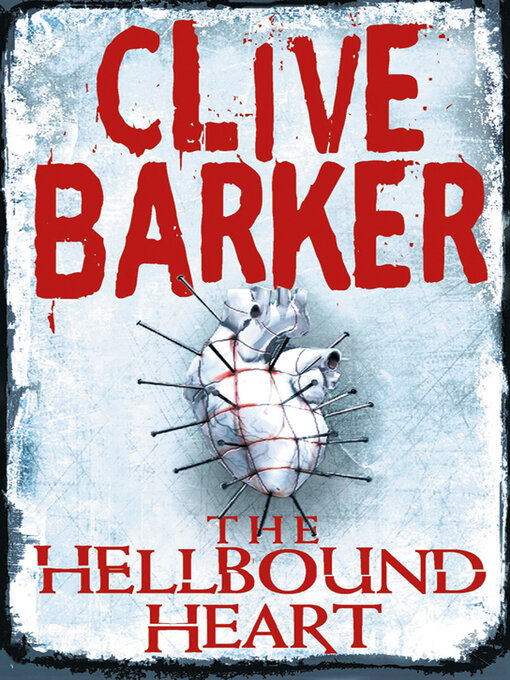
First of all, just look at this cover and tell me that's not twisted. I had the book for a week before I happened to glance at it upside-down, and nearly wet myself in fright. And the story's not half-bad either, a sado-masochistic romp through the depraved desires of man and woman, governed by those guardians of pain known as the cenobites. Made famous by Barker's own cinematic adaptation Hellraiser, The Hellbound Heart is deeply warped stuff, bloody, slimy, and unpleasant. When you're done, you might consider renting the movie, or instead go on to Barker's Books of Blood, Cabal, or The Damnation Game, and revel in one of modern literature's true giants of imagination and perversity. Let's hope Barker's long-rumoured follow-up The Scarlet Gospels is a return to form after his lengthy (but admittedly terrific) forays into fantasy.

Hell House by Richard Matheson -
Every Halloween needs a haunted house story, and while some may choose The Shining or The Haunting of Hill House (both vastly worthy of your time), Hell House is my choice for full-bore balls-to-the-wall horror. Other houses may be haunted, but this one is mean. And it doesn't like you. Much like The Haunting of Hill House, Hell House concerns itself with a group of researches studying a supposed 'haunted house' for signs of the paranormal. Unlike The Haunting of Hill House, Matheson adds explicit imagery and shocks, going for ectoplasmic scares instead of subtlety.
Su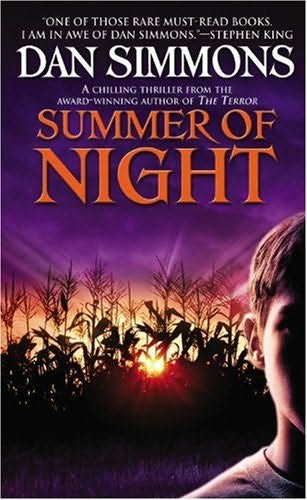 mmer of Night by Dan Simmons -
Dan Simmons is a monster. He can write absolutely anything and make it work. His science-fiction (epitomized by Hyperion) is spectacular. His mystery novels are first-rate noir. And his horror? Sheesh, Song of Kali is as evil as they come, and his last novel The Terror was, well, bloody terrifying. But Summer of Night is, for my money, the best evocation of childhood nostalgia and terror since Stephen King's IT, maybe even better (but it's hard for me to find fault with IT, I do love it so). This one works the screws so lovingly, so precisely, that when those kids enter that house for the last time, you will not stop reading until the very end. And it's a pretty thick book.
Monster Island by David Wellington, The Rising by Brian Keene, and World War Z by Max Brooks -
-
All Hallow's Eve is just not the same without a visit from the undead. And I mean the real undead: rotted, bloating corpses who feast on human brains, not these increasingly emo Twilighty vampires who just mope about wanting to be loved, dammit! Thanks a lot for that, Anne Rice. [That said, I've heard nothing but good things about the recent HBO vamps-with-problems series True Blood.] I want scares, and there's nothing scarier than a shambling corpse. All three of these novels deal with zombies in the proper way - no negotiations, no motivations, shoot 'em in the head before they get you first. The Rising takes it's cue from the apocalptic sensitibilites of George Romero's epic, seminal Living Dead film series [but please ignore Diary of the Dead; sheesh, what a blowful waste of film, George, what were you thinking?] - there's no hope, all is lost, and humanity crumbles. Kind of like Jose Saramago's Blindness, but with dead people coming to life in place of loss of sight. Monster Island is more slam-bang, and there's a decided hint of the Resident Evil videogames in its chase scenes and big boss bad guys.
  World War Z is likely the most realistic attempt ever at documenting a true catastrophe with its corresponding miltary response; as a consequence, it's the best written but least fun of the three. Nevertheless, all three provide copious amounts of gore, and are sure to bring about nightmares.
So, without further ado, the books that scare me again and again.
The Hellbound Heart by Clive Barker -
First of all, just look at this cover and tell me that's not twisted. I had the book for a week before I happened to glance at it upside-down, and nearly wet myself in fright. And the story's not half-bad either, a sado-masochistic romp through the depraved desires of man
 and woman, governed by those guardians of pain known as the cenobites. Made famous by Barker's own cinematic adaptation Hellraiser, The Hellbound Heart is deeply warped stuff, bloody, slimy, and unpleasant. When you're done, you might consider renting the movie, or instead go on to Barker's Books of Blood, Cabal, or The Damnation Game, and revel in one of modern literature's true giants of imagination and perversity. Let's hope Barker's long-rumoured follow-up The Scarlet Gospels is a return to form after his lengthy (but admittedly terrific) forays into fantasy.
Hell House by Richard Matheson -
Every Halloween needs a haunted house story, and while some may choose The Shining or The Haunting of Hill House (both vastly worthy of your time), Hell House is my choice for full-bore balls-to-the-wall horror. Other houses may be haunted, but this one is mean. And it doesn't like you. Much like The Haunting of Hill House, Hell House concerns itself with a group of researches studying a supposed 'haunted house' for signs of the paranormal. Unlike The Haunting of Hill House, Matheson adds explicit imagery and shocks, going for ectoplasmic scares instead of subtlety.
Su
mmer of Night by Dan Simmons -Dan Simmons is a monster. He can write absolutely anything and make it work. His science-fiction (epitomized by Hyperion) is spectacular. His mystery novels are first-rate noir. And his horror? Sheesh, Song of Kali is as evil as they come, and his last novel The Terror was, well, bloody terrifying. But Summer of Night is, for my money, the best evocation of childhood nostalgia and terror since Stephen King's IT, maybe even better (but it's hard for me to find fault with IT, I do love it so). This one works the screws so lovingly, so precisely, that when those kids enter that house for the last time, you will not stop reading until the very end. And it's a pretty thick book.
Monster Island by David Wellington, The Rising by Brian Keene, and World War Z by Max Brooks
-All Hallow's Eve is just not the same without a visit from the undead. And I mean the real undead: rotted, bloating corpses who feast on human brains, not these increasingly emo Twilighty vampires who just mope about wanting to be loved, dammit! Thanks a lot for that, Anne Rice. [That said, I've heard nothing but good things about the recent HBO vamps-with-problems series True Blood.] I want scares, and there's nothing scarier than a shambling corpse. All three of these novels deal with zombies in the proper way - no negotiations, no motivations, shoot 'em in the head before they get you first. The Rising takes it's cue from the apocalptic sensitibilites of George Romero's epic, seminal Living Dead film series [but please ignore Diary of the Dead; sheesh, what a blowful waste of film, George, what were you thinking?] - there's no hope, all is lost, and humanity crumbles. Kind of like Jose Saramago's Blindness, but with dead people coming to life in place of loss of sight.
Monster Island is more slam-bang, and there's a decided hint of the Resident Evil videogames in its chase scenes and big boss bad guys. World War Z is likely the most realistic attempt ever at documenting a true catastrophe with its corresponding miltary response; as a consequence, it's the best written but least fun of the three. Nevertheless, all three provide copious amounts of gore, and are sure to bring about nightmares.Runners up: Stephen King's Pet Semetary and Cell. Semetary is King's grisliest, bleakest novel, unrelenting in its utter despair. Plus, it has the undead, but by the tenets on the genre, it's not technically a zombie novel. Cell is definitely zombie-centric, but it falls apart half-way through, and again, they aren't technically zombies in the classic sense. The first half is as gory and suspenseful as anything he's ever written, however.
Stinger by Robert R. McCammon -
Stinger by Robert R. McCammon -
Stinger is McCammon's love letter to the monster b-movie. An alien being crashes to Earth, followed soon after by another extra-terrestrial of a far more unpleasant sort, a being able to adapt and alter its form to whatever it chooses. And what it chooses usually results in mass chaos and deaths galore. Echoes of The Thing (the John Carpenter version) are purely intentional; this is a pulpy ode to everything we love about monster movies. The fact that it has not been made into a film is ridiculous, as if there was ever a novel that cried out for a worthy director to adapt it, this is it. I'm thinking James Gunn or Robert Rodriguez to bring out the fun as well as the ooze.
Last Days by Brian Evenson -
Evenson's novel (due out in early 2009) concerns horrors of a different sort; the paranoia and despair that accompanies the feeling of having no idea what is going on. Absolutely bizarre does not begin to describe the plot, as a cop finds himself embroiled in a mysterious cult of amputees who won't tell him what he's expected to do, or how he can expect to extricate himself from their clutches. Needless to say, things get confusing, and bloody. Evenson expertly plays with the tension, resulting in an ending as weird and strangely affecting as any since I Am Legend (see below). Last Days is best described as a nightmarish co-mingling of Franz Kafka and Clive Barker. David Lynch, a horror director who had never actually directed a horror film, should be tapped to direct the adaptation posthaste.
I Am Legend by Richard Matheson -
A two-fer for Matheson! Just realized that I actually had no vampires on this list, and a Halloween without vampires is like peanut butter without jelly, chili without beer, Tim Burton without Johnny Depp, etc. I'll be the first to admit that Dracula never rocked my boat; I found it dull and uninspired, and the debut movie version (Bela Lugosi) is plain and simple boring. You want great B&W horror from the same time, James Whale's Frankenstein and Bride of Frankenstein are your bets. Comparing Whale's masterpieces to Tod Browning's achingly poor adaptation is like comparing Hitchcock to Uwe Boll. Ok, that came across as mean. Anyway, I never cared for the initial bloodsucker, but his reputation lives on, and at least (for me) some superlative offshoots resulted from Stoker's snoozefest. Legend is the best, a fast, gritty, and surprisingly poignant apocalyptic tale of the last human on Earth, beset on all sides by vampires galore. And while the Will Smith movie had its moments, it blew it by the end. This is a story crying out for a lean, low-budget, Night of the Living Dead esthetic, not, I repeat, not big-budget bombast.
Runner-up: 'Salem's Lot. Stephen King's best pure horror story. These are vampires as they were meant to be; monsters, pure and simple.
Last Days by Brian Evenson -

Evenson's novel (due out in early 2009) concerns horrors of a different sort; the paranoia and despair that accompanies the feeling of having no idea what is going on. Absolutely bizarre does not begin to describe the plot, as a cop finds himself embroiled in a mysterious cult of amputees who won't tell him what he's expected to do, or how he can expect to extricate himself from their clutches. Needless to say, things get confusing, and bloody. Evenson expertly plays with the tension, resulting in an ending as weird and strangely affecting as any since I Am Legend (see below). Last Days is best described as a nightmarish co-mingling of Franz Kafka and Clive Barker. David Lynch, a horror director who had never actually directed a horror film, should be tapped to direct the adaptation posthaste.
I Am Legend by Richard Matheson -
A two-fer for Matheson! Just realized that I actually had no vampires on this list, and a Halloween without vampires is like peanut butter without jelly, chili without beer, Tim Burton without Johnny Depp, etc. I'll be the first to admit that Dracula never rocked my boat; I found it dull and uninspired, and the debut movie version (Bela Lugosi) is plain and simple boring. You want great B&W horror from the same time, James Whale's Frankenstein and Bride of Frankenstein are your bets. Comparing Whale's masterpieces to Tod Browning's achingly poor adaptation is like comparing Hitchcock to Uwe Boll. Ok, that came across as mean. Anyway, I never cared for the initial bloodsucker, but his reputation lives on, and at least (for me) some superlative offshoots resulted from Stoker's snoozefest. Legend is the best, a fast, gritty, and surprisingly poignant apocalyptic tale of the last human on Earth, beset on all sides by vampires galore. And while the Will Smith movie had its moments, it blew it by the end. This is a story crying out for a lean, low-budget, Night of the Living Dead esthetic, not, I repeat, not big-budget bombast.
Runner-up: 'Salem's Lot. Stephen King's best pure horror story. These are vampires as they were meant to be; monsters, pure and simple.
Subscribe to:
Posts (Atom)
